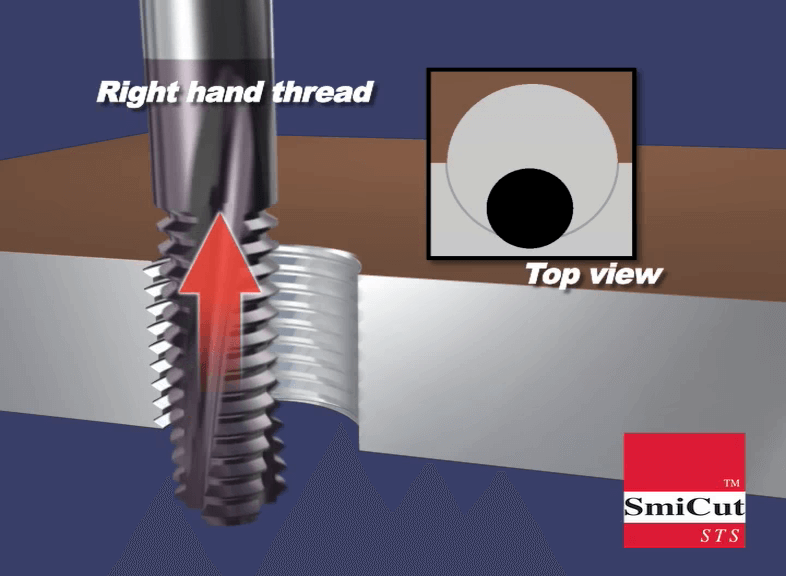

What the video shows
See how a rotating thread mill follows a helical CNC path and why thread milling can be chosen instead of tapping.
How does thread milling work?
Thread milling is a CNC process in which a rotating cutter follows a helical toolpath to produce a thread. The cutter is smaller than the finished thread diameter. It rotates around its own axis while the machine moves it in a circular path and simultaneously moves it axially by the thread pitch.
This combination of movements generates the thread profile in a controlled milling operation. Because the thread diameter is defined by the CNC toolpath, the final size can be adjusted using cutter radius compensation. A suitable thread mill can often machine several thread diameters that share the same pitch and profile.
Main advantages compared with tapping
Thread milling generally uses lower cutting forces and provides more room for chip evacuation because the cutter does not fill the entire hole. If a cutter breaks, its smaller diameter also normally makes it easier to remove from the component than a broken tap.
Depending on the cutter geometry and CNC program, one tool may also produce different thread diameters, right- or left-hand threads, and internal or external threads. This flexibility can reduce the number of tools required while allowing the thread size to be corrected without replacing the cutter.
For a more detailed comparison, read Why choose Thread Milling instead of Tapping?
From tool selection to CNC program
Successful thread milling starts with the correct cutter, cutting data and toolpath. Check the thread diameter, pitch, profile, cutting length, workpiece material and machine capability before machining.
ThreadBurr solid carbide thread mills combine thread milling and deburring in one operation. SmiCut’s SmiProg software helps you select a suitable tool, obtain cutting data and generate a CNC program.